The Impact of Temperature on Solar Battery Performance
In this article
People love to talk about solar panels. “How many do I need?” “Can I run my whole house?” Fair questions. But the thing that quietly wrecks more solar battery systems than almost anything else? Temperature. Too hot, too cold, and suddenly the beautiful numbers from the spec sheet don’t mean what you thought they did. Once you really see how much heat and cold push your batteries around, sizing the bank, choosing lithium vs lead acid, and deciding where to put everything stops being guesswork and starts being strategy.
Why Temperature Matters So Much for Solar Batteries
A battery isn’t a magic box; it’s a chemistry experiment in a metal case. And chemistry is moody. Warm it up and the reactions speed along; cool it down and everything drags. That’s why a battery can feel “strong” on a hot afternoon and weirdly sluggish on a freezing morning, even though nothing else has changed.
Put the exact same battery in three spots—a baking-hot garage, a calm indoor utility room, and a shed that turns into a freezer in January—and it will act like three different products. Capacity changes, power output changes, how fast it will take a charge changes, and how quickly it ages definitely changes. The brochure doesn’t tell you that part very loudly.
If you’re trying to plan backup runtime, figure out payback, or just avoid waking up to a dead bank in a heat wave, you can’t just stare at “25°C” numbers on a data sheet and call it a day. You have to design for the climate you actually live in and the weird places we actually shove batteries.
How Heat Affects Solar Battery Capacity and Lifespan
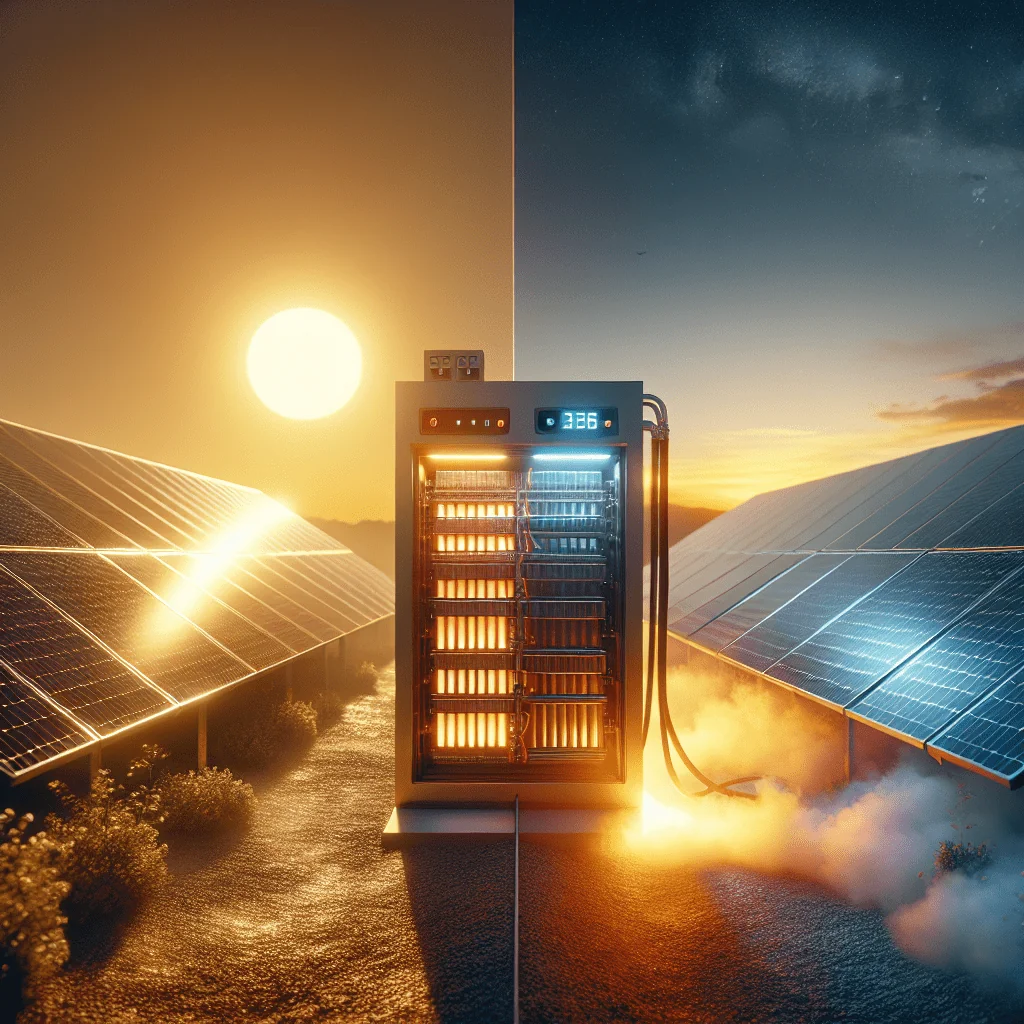
Heat is sneaky. On day one, it feels like a bonus. Hot batteries usually give you more oomph in the moment—higher apparent capacity, better output. So you think, “Nice, this thing is a beast.” But under the hood, that extra activity is like running your car at redline all the time: fun now, expensive later.
With lithium solar batteries, high temperatures speed up the slow loss of capacity and can push the battery management system (BMS) into self-protection mode. You might see throttled charging, limited output, or even shutdowns when things get too toasty. Lead acid is a different flavor of pain: the plates corrode faster, the electrolyte dries out, and suddenly you’re topping up water or replacing batteries years earlier than planned.
I’ve seen “10‑year” batteries cooked half to death in three summers because someone stuck them in a metal shed with no ventilation. On paper the system looked perfect; in reality the heat quietly shredded the payback period. If you treat your battery like it enjoys sauna conditions, don’t be surprised when it lives a short, dramatic life.
Cold Weather and Reduced Solar Battery Performance
Cold does almost the opposite, and it’s just as annoying. The chemistry slows down, so your battery feels smaller and weaker. You flip on a load in January and think, “Why is my runtime so short? This worked fine in June.” The bank didn’t shrink; it just hates the temperature.
Lithium batteries are especially fussy about charging when they’re cold. Many will simply refuse to accept a charge below a certain temperature because charging frozen lithium cells can permanently damage them. Lead acid will still charge in the cold, but it does it badly—slower, less efficient, and the charger may think it’s “full” when it really isn’t.
The good news is that most of the cold penalty is temporary. Warm the battery back up into its normal operating range and the capacity mostly comes back. The bad news? If you insist on charging lithium when it’s really cold or leave lead acid partially discharged in freezing weather, you can turn a temporary annoyance into permanent damage. Winter design isn’t optional; it’s survival planning for your battery bank.
Temperature, Depth of Discharge, and Long-Term Degradation
Depth of discharge (DoD) is just a fancy way of saying “how far you run the tank down before you refill it.” Draining a battery to 80–90% used every day is much harsher than just sipping the top 20–30%. Now throw temperature into that mix and things get interesting—sometimes ugly.
Deep discharges in high heat are brutal. A lithium or lead acid battery cycled hard in a hot room will age noticeably faster than the same model gently used in a cool, steady environment. It’s like sending one person on a daily jog in spring weather and another on daily sprints in a desert at noon; guess who burns out first. In the cold, deep discharge is also stressful, especially for lead acid left sitting low and frozen—plate damage and sulfation love those conditions.
If you want your solar battery to grow old with you instead of quitting early, you aim for two things: moderate temperatures and not hammering it to 0–10% every single night. Off‑grid cabins and homes that lean on batteries 24/7 need to take this seriously or budget for more frequent replacements.
Lithium vs Lead Acid: Temperature Behavior Compared
People often frame the lithium vs lead acid choice as “modern vs old school” or “expensive vs cheap,” but temperature behavior is where the real story lives, especially if you’re off grid or in a harsh climate. The chemistry you pick decides how grumpy your system gets when the weather swings.
Temperature Effects on Lithium vs Lead Acid Solar Batteries
| Aspect | Lithium (LiFePO₄ and similar) | Lead Acid (flooded, AGM, gel) |
|---|---|---|
| High heat behavior | Feels strong at first but ages faster; BMS may cut charging or output to protect cells | Shows higher capacity short term but suffers rapid plate corrosion and electrolyte loss |
| Cold behavior | Noticeable drop in capacity and power; charging often blocked below a set temperature | Capacity drops too; can still charge, but slowly and less efficiently |
| Ideal storage location | Indoors, shaded, with stable temps; keep away from freezing and hot spots | Cool, ventilated area; avoid heat sources, freezing, and ignition sources |
| Suitability for off-grid in harsh climates | Excellent if you provide temperature control and rely on a good BMS | Workable but heavy, less energy-dense, and very vulnerable to long-term heat |
So what does that mean in practice? Lithium usually wins for frequent cycling and deeper usable capacity, but only if you respect its temperature limits. You can’t just bolt it to an exterior wall in the sun and hope for the best. Lead acid will put up with cold charging better, but punish you if you let it bake. It’s less of a “which is best” question and more of a “which chemistry matches my climate and my willingness to baby it” question.
Temperature and Sizing a Solar Battery Bank for Home Use
Most sizing conversations start with, “How many kilowatt-hours do you use?” That’s fine, but it’s half the story. Those tidy calculators online quietly assume mild lab conditions, not your attic in August or your unheated garage in February.
Live somewhere hot? You might size a bit larger than the spreadsheet says, because you know the batteries will lose capacity faster over the years when they’re running warm. Live somewhere cold with gloomy winters? You design for the season when the sun is stingy and the batteries act smaller, not for that one perfect sunny day in May.
Inverters matter here too. A hybrid inverter that actually talks to the battery and respects temperature limits can adjust charging behavior as things heat up or cool down. That can mean fewer surprises and more realistic runtimes across the year than a simple solar inverter that just shoves power around and hopes the battery copes.
How Temperature Affects Solar Battery Runtime and Amp-Hour Calculations
On paper, amp-hour math is clean: convert amp hours to kWh, divide by your loads, and boom—runtime. In the real world, temperature walks in and scribbles all over that neat calculation.
A battery rated at, say, 200 Ah at 25°C will not be a 200 Ah battery at 0°C or 40°C. In the cold, you notice it first: “Why did my backup only last two hours instead of three?” In the heat, you might get your expected runtime early on, but several summers later the same bank mysteriously can’t keep up because it aged faster than the spec sheet implied.
The fix isn’t complicated, just rarely mentioned: treat the rated capacity as optimistic, then build in a safety margin for temperature swings and long-term wear. If you’re dreaming of running the whole house on solar and batteries, that margin isn’t a luxury—it’s the difference between “we’re fine” and “who turned the lights off?”
Installation Choices: Location, Voltage, and Temperature Control
Manufacturers quietly warn about temperature in the installation notes, and a lot of people quietly ignore them. Where you physically park the battery bank matters almost as much as which brand you buy. A cool, dry, indoor spot with some airflow usually beats any fancy marketing claim on the box.
System voltage plays a role, too. A 24V or 48V setup moves the same power with less current than a 12V one. Less current means less heat in the cables and connections, which is one less way to cook your system. If you’re building anything bigger than a tiny RV setup, the jump to higher voltage is often about sanity and safety as much as efficiency.
In really hot or really cold regions, simple temperature control goes a long way. A bit of insulation around an outdoor enclosure, a vent fan, keeping batteries off bare concrete, or just not sticking them in direct sun can literally add years to their life. You don’t need a data center; you just need to stop treating them like yard tools.
Temperature, Safety, and Solar Battery Storage Worth
Temperature isn’t just about performance; it’s about not burning your stuff down or wrecking expensive gear. Extremely high heat can raise the risk of thermal runaway in abused or damaged lithium batteries, and lead acid batteries can gas heavily or even vent explosively if overcharged in hot, sealed spaces. On the flip side, very low temps can crack cases or stress internals if you push batteries outside their safe ranges.
Basic safety rules go a long way: don’t park batteries in direct sun, don’t trap them in a tiny, unventilated oven of a closet, and don’t ignore the operating temperature range in the manual like it’s fine print on a phone app. Lead acid needs honest-to-goodness ventilation for gases; lithium needs a quality BMS and wiring that follows the book, not a guess.
So when you’re asking, “Is solar battery storage worth it?” add one more question: “Where will this thing actually live?” A system that looks fantastic in a spreadsheet but bakes in a tin shed will quietly eat its own payback. The same setup in a cool corner of the basement? Totally different story.
Maintenance and Troubleshooting: Temperature-Related Issues
A huge number of “my solar battery isn’t charging right” complaints boil down to temperature once you strip away the noise. A lithium pack that stubbornly refuses to charge may not be “broken” at all; the BMS might just be saying, “Nope, too cold,” or “Nope, too hot,” and silently blocking charging to stay alive.
Lead acid is more passive. It’ll often still accept a charge, but if it’s been roasted for years, it may never really hit full capacity again, no matter what the charger says. People blame the inverter, the panels, the charger—everything but the fact that the battery spent summers simmering in 40°C air.
A simple maintenance routine helps: check that the battery area isn’t turning into an oven or an icebox, make sure there’s some airflow, and pay attention to any signs of overheating—odd smells, swelling, discolored terminals. With lead acid, actually look at electrolyte levels and corrosion, not just the voltage on a screen. And if you’re using a portable solar generator, remember it’s not a rock: leaving it in blazing sun or freezing wind all day will absolutely show up in how long it lasts.
Using Temperature Knowledge to Design a Better Home Solar System
You can’t bargain with the weather, but you have a lot more control than it feels like. You decide whether the batteries live in a shaded utility room or a metal oven of a shed. You decide whether to go lithium or lead acid for your climate, and whether you size the bank for real winters and real summers or for some imaginary “perfect day.”
Once you understand how temperature pushes your solar batteries around, your design choices get sharper. You stop believing the lab numbers are gospel and start building in margins, protection, and sensible locations. That’s how you get a system that actually backs up your home when the grid drops—or even lets you run mostly on solar and batteries—without nasty surprises every time the weather swings from one extreme to the other.