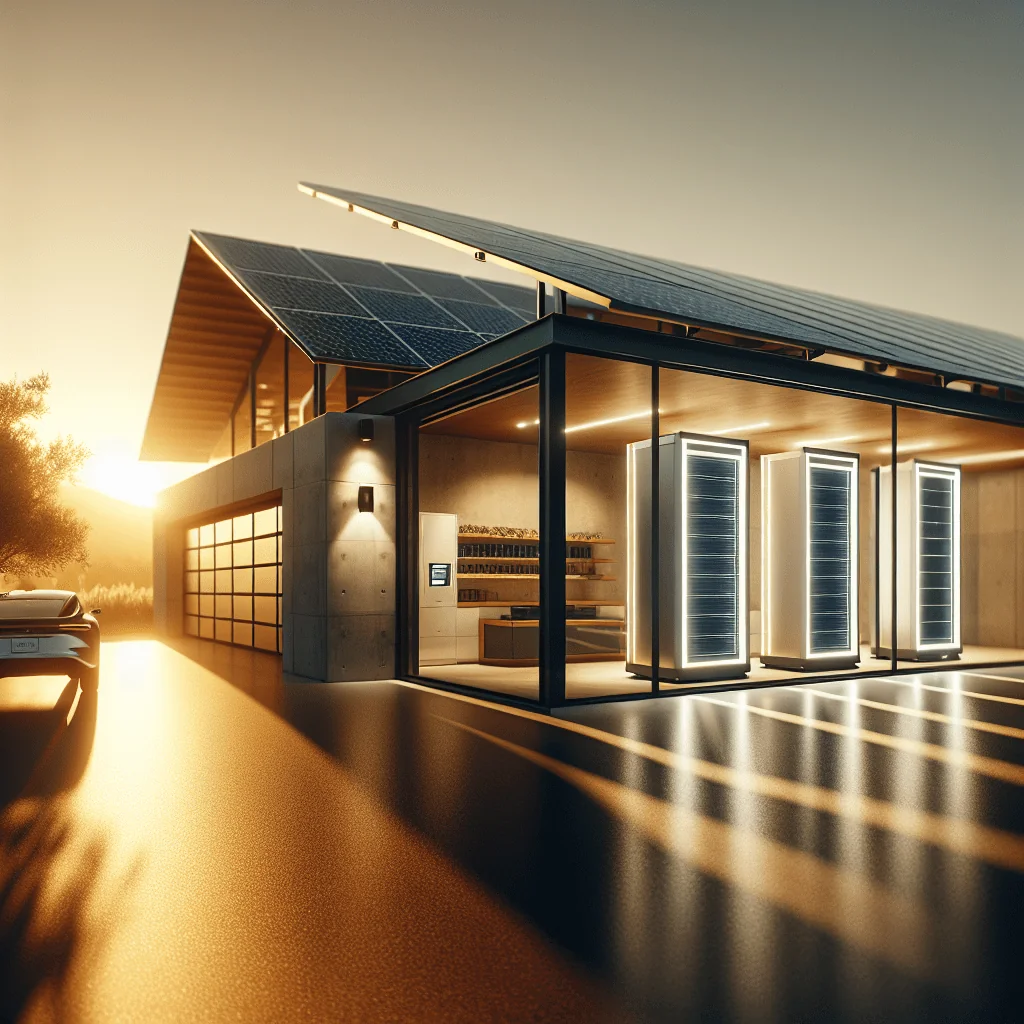

Solar Energy Storage Solutions for Every Home
In this article
Think of a home solar setup as a tiny power plant on your roof with a fuel tank in the basement or garage. The panels make the power; the batteries hang onto it for later. Sounds simple, but the details can get messy fast: how many panels, what kind of battery, what size inverter, how long it will actually run your stuff, and whether the whole thing is even worth the money.
This isn’t a sales brochure. It’s the “what would I do if this were my house?” version. We’ll jump around a bit, because that’s how real planning works in the wild—you think about cost, then safety, then back to battery size, then “wait, can this even run my AC?”
Step 1: How Many Solar Panels Do I Need for My Home?
People usually start with the wrong question: “How many panels can I cram on my roof?” The better question is, “How much energy do I actually burn through every day?” Roofs don’t care about your feelings; they care about square footage and sunlight.
Estimating daily energy use and panel count
Grab a stack of your last 12 power bills. Somewhere on there, usually in tiny, annoying print, is your monthly kWh use. Add up a year, divide by 365, and you’ve got your average daily kWh. It will probably be higher than you hoped.
Now, one typical home panel—say 350–450 W—might give you roughly 1.2–2 kWh per day, depending on where you live and how much sun you actually get (not what the brochure promised). Take your daily kWh use and divide by the daily kWh from one panel. That rough number is your panel count.
Then reality steps in: roof shape, shading from trees, budget, HOA drama, all of it. Maybe you only cover 70–80% of your use. Maybe you oversize a bit because you want to feed a battery for night-time and outages. There’s no perfect number—just a trade-off that fits your house and your wallet.
Lithium vs Lead-Acid: Choosing a Solar Battery Type
Once you have a ballpark for panel output, the next argument is almost always the same: “Do I really need lithium batteries, or can I save money with lead-acid?” If you’ve ever owned an old car with a dying battery, you already know why this matters.
Key differences between lithium and lead-acid batteries
Lithium batteries are the “set it and mostly forget it” option. They’re lighter, smaller, and you can usually use 80–90% of their capacity without beating them to death. They cost more up front, but they generally last more cycles and don’t demand constant babysitting.
Lead-acid, on the other hand, is the budget special. Cheaper to buy, heavier to move, and grumpy if you run them down too far or leave them sitting half-charged. Use them hard every day and they age fast. Use them gently in a cabin you visit a few weekends a year? They can be fine.
My blunt take: for a normal house that cycles the battery daily or wants serious backup, lithium usually wins on total cost over time. Lead-acid still has a place if you’re squeezing every last dollar, or you’re powering a hunting cabin that only wakes up a few times a year.
Comparison of lithium vs lead-acid batteries for solar storage
| Feature | Lithium Battery | Lead-Acid Battery |
|---|---|---|
| Upfront cost | Higher | Lower |
| Usable depth of discharge | Typically 80–90% | Typically 30–50% |
| Maintenance needs | Low | Medium to high |
| Weight and size | Lighter and smaller | Heavier and bulkier |
| Best use case | Daily cycling, home backup | Low-use cabins, tight budgets |
That’s the tidy comparison. In real life, what usually tips people toward lithium is not a spreadsheet—it’s the idea of not having to fiddle with batteries every few months or replace them just when you’ve finally forgotten how much they cost.
What Is Depth of Discharge and Why It Matters
“Depth of discharge” (DoD) sounds like something from a submarine movie, but it’s just how much of your battery’s stored energy you’re allowed to use before you should recharge.
Example: a 10 kWh battery at 80% DoD lets you use about 8 kWh. The other 2 kWh is a safety buffer so you don’t slowly murder the battery.
Using depth of discharge in real system sizing
Lithium is usually comfortable at 80–90% DoD. Lead-acid prefers a gentler life—think 30–50% if you want it to last. Yes, you can go deeper. Yes, you’ll pay for it in lifespan.
When you’re sizing a battery bank, ignore the big headline number and focus on usable capacity: total capacity × allowed DoD. That’s the energy you can really count on for runtime, long-term life, and payback math. Anything else is wishful thinking.
How to Size a Solar Battery Bank for Your Home
Here’s where people often jump straight to “I want to run my whole house for three days!” Okay—but do you want to pay for that? Start with a simpler question: what absolutely has to stay on when the grid goes off?
Step-by-step method to size your battery bank
Make a list. Literally. Lights, fridge, Wi‑Fi, maybe a well pump, maybe a small heater or mini-split. Write down each item’s wattage and how many hours per day you want it to run during an outage or at night.
Multiply watts × hours to get Wh for each device. Add them all up, then divide by 1,000 to get kWh. That’s your target usable energy.
Now adjust for DoD and system losses. If you want 10 kWh usable and your battery can safely use 80% of its capacity, you need about 10 ÷ 0.8 ≈ 12.5 kWh total. Off-grid or worried about long storms? Add a margin. It’s cheaper to oversize a bit now than to sit in the dark later wishing you hadn’t cut corners.
Solar Battery Amp Hours to kWh Conversion
Old-school and many off-grid batteries still talk in amp hours (Ah). Most people just stare at that number and nod. To compare anything, you need kWh.
Simple formula for amp hours to kWh
Use this: volts × amp hours ÷ 1,000 = kWh. That’s it.
Example: 12 V, 200 Ah battery → 12 × 200 ÷ 1,000 = 2.4 kWh total capacity. Then you apply your DoD. If you only want to use 50%, you’ve really got about 1.2 kWh you can lean on.
This conversion is what lets you compare 12 V vs 24 V vs 48 V banks and figure out how many batteries in series and parallel you need to hit your target kWh without guessing.
12V vs 24V vs 48V Solar Battery System Choices
Voltage choice is one of those things people ignore until the cables start looking like garden hoses. Same power at lower voltage means higher current, which means thicker wire and more loss.
Matching system voltage to system size
Rough rule of thumb, based on what actually works in the field:
12 V: tiny systems—RVs, small boats, sheds, or a very modest cabin. 24 V: small to medium off-grid homes, or when you’re in that gray area between “hobby system” and “real house.” 48 V: full-house systems, bigger inverters, serious loads.
Most modern whole-home setups go 48 V. It keeps current manageable, plays nicely with lithium modules, and gives you room to grow without rebuilding everything.
Solar Inverter vs Hybrid Inverter: Key Differences
Inverters are the translators: they turn DC from your panels and batteries into AC your house can actually use. A standard solar inverter only talks to panels. A hybrid inverter speaks both “panel” and “battery” fluently.
Choosing between solar inverter and hybrid inverter
With a regular solar inverter, adding batteries later usually means bolting on a separate battery inverter/charger. It works, but wiring and control can get complicated.
A hybrid inverter rolls it all into one box: it can charge the battery, power your loads, and send extra to the grid, often with smart controls and app monitoring.
If you’re even 50% sure you’ll want batteries someday, a hybrid inverter up front can save you a lot of rework. If you already have a grid-tied system you like, you might look at AC‑coupled battery options instead of ripping everything out.
What Size Inverter for a Solar Battery System?
Inverter size is about power at one moment, not energy over a whole day. Big difference. You can have a modest battery but still need a beefy inverter if you want to run heavy loads at the same time.
Considering surge loads and future growth
Make a list of what might be on at once: fridge, lights, Wi‑Fi, TV, maybe a well pump, maybe AC. Add up the wattage. Then add some breathing room—20–30% isn’t crazy.
Also look at surge loads. Motors and compressors (fridges, pumps, AC units) often pull 2–3× their running power for a second or two at startup. Your inverter needs to survive that without throwing a tantrum.
If you think you might add more loads later, don’t size the inverter right at the edge. Regret is more expensive than a slightly larger inverter.
Solar Battery Lifespan, Degradation and Payback Period
Batteries are like shoes: the more you use them, the faster they wear out. Chemistry, temperature, and how deep you cycle them all decide how fast that happens.
How lifespan affects value and payback
Every charge–discharge cycle chips away at capacity. Run them hot or drain them deep often, and they age faster. Over the years, your “10 kWh” battery might quietly become an “8 kWh” battery, then 7, and so on.
Payback math is never just “battery cost ÷ bill savings.” You also have to factor in how often you cycle it, your electricity rates, and how much you personally value not losing power during an outage. In many markets, panels pay back faster than batteries—but batteries buy you comfort and independence, which don’t show up on the bill.
How to Calculate Solar Battery Runtime
Runtime is where the marketing hype usually crashes into reality. The basic idea, though, is simple enough.
Example runtimes for common home loads
Step one: find usable kWh (total capacity × allowed DoD). Step two: estimate your average load in kW. Step three: runtime ≈ usable kWh ÷ kW load.
Example: 10 kWh usable and a steady 1 kW average load → roughly 10 hours. Bump that load to 2 kW and you’re down to about 5 hours. No magic.
Real life adds wrinkles: inverter losses, surges, people turning on more stuff “just for a minute.” For backup planning, assume a slightly higher load and slightly less usable capacity than the brochure claims. It’s better to be pleasantly surprised than sitting in the dark.
Can I Run a House on Solar and Batteries Only?
Yes, you can run a house entirely on solar and batteries. People do it every day. The catch is that off-grid design is less “set and forget” and more “design your lifestyle around your power system.”
Design tips for fully off-grid homes
An off-grid house needs enough panels to refill the batteries on an average day and enough battery capacity to cover nights plus a few bad-weather days. You also need an inverter sized for your peak loads and charge controllers that can actually handle your array.
Many off-grid homes avoid electric water heating, electric ranges, and other huge loads, or they use gas/propane or super-efficient appliances instead. Load management—deciding what runs when—is part of daily life.
For a grid-tied home, going “mostly independent” is easier: you let the grid be your backup, use solar and batteries to cut your bill and ride through outages, and don’t have to oversize everything to survive a week of storms.
Best Solar Batteries for Home Backup: Key Categories
You can spend days comparing brands and model numbers, but it’s usually more useful to think in categories first. What kind of backup are you actually aiming for?
Main categories of home backup batteries
Most home setups fall into one of these buckets:
- Whole-home backup systems – Big lithium packs paired with hybrid inverters, sized to keep major loads like heating, cooling, and cooking running. Great, but not cheap.
- Essential circuits backup – Medium-sized batteries feeding a dedicated sub-panel: lights, fridge, Wi‑Fi, maybe a few outlets. This is the sweet spot for a lot of people.
- Modular rack batteries – Stackable lithium modules, almost always on 48 V, that you can grow over time as budget and needs change.
- Lead-acid banks – Flooded or sealed batteries used where budget rules and daily cycling is light, like seasonal cabins or simple off-grid shacks.
- Portable solar generators – All-in-one boxes with built-in battery, inverter, and charge controller. Great for renters, camping, or keeping a few key items alive during short outages.
Your “best” option isn’t universal; it depends on how often you expect to use it, how much you can spend, and whether you’re trying to ride out a two-hour outage or a three-day storm.
Best Portable Solar Generator vs Fixed Battery System
Portable solar generators are the power-tool version of backup: plug it in, carry it around, no electrician required. Fixed systems are more like a built-in appliance.
When to choose portable vs fixed systems
A portable unit is perfect if you’re renting, moving soon, or only need to run phones, laptops, a router, and maybe a small fridge for a while. You can toss it in the car for camping or tailgating, too.
A fixed battery system ties into your home’s electrical panel. It can handle higher loads and longer runtimes, integrate with your rooftop solar, and kick in automatically when the grid fails. The trade-off: higher cost and usually a professional install.
Rule of thumb: if you’re trying to keep a whole house comfortable through regular outages, go fixed. If you just want to keep the essentials alive now and then, portable can be enough.
Solar Battery Safety Tips and Installation Requirements
Batteries are harmless most of the time and very unfriendly when something goes wrong. Safety starts with where you put them and how you wire them.
Core safety and installation guidelines
Basic points that are easy to skip but matter a lot:
Keep batteries in a spot with decent temperature control and, for certain chemistries, proper ventilation. Use correctly sized cables, fuses, and breakers so a fault doesn’t turn a wire into a toaster element. Mount everything securely so nothing can shift, fall, or get kicked.
Keep flammables away from the battery area. Follow the manufacturer’s spacing and temperature rules instead of guessing. Make sure emergency shutoffs are obvious and reachable. And yes, local codes and inspections are annoying—but they exist because people have burned down garages doing this wrong.
Solar Battery Maintenance Checklist
Even “maintenance-free” systems appreciate a little attention. A five-minute check a few times a year can catch problems before they get expensive.
Simple maintenance tasks to do regularly
A basic checklist might include:
Look over the batteries for swelling, leaks, or physical damage. Check cables and lugs for corrosion or looseness. Make sure vents or cooling fans aren’t blocked. Glance at your monitoring app or display for any weird voltages or error codes.
Flooded lead-acid needs extra love: check electrolyte levels, top up with distilled water as needed, and keep terminals clean. For any chemistry, avoid baking the batteries in hot spaces and stick to the recommended charge settings if you want them to last.
Why Is My Solar Battery Not Charging Fully?
If your battery never seems to hit “full,” don’t assume it’s dead just yet. There are several usual suspects.
Diagnostic steps to find charging problems
Start with the obvious: are the panels dirty or shaded? Is the charge controller actually showing charging current? Are any breakers or fuses tripped?
Next, check that the controller’s charge profile matches your battery type and that the voltage limits are reasonable. Wrong settings can leave a battery stuck at partial charge.
Finally, remember that older batteries lose capacity. A worn-out battery might reach its “full” voltage quickly but not actually store much energy. If you’re not sure where the problem is—panels, wiring, controller, or battery—a quick look from a pro with the right meter can save a lot of guesswork.
Are Solar Battery Storage Solutions Worth It?
The honest answer: it depends what “worth it” means to you. If you only care about the fastest financial payback, panels alone usually win. If you care about not losing power when the grid blinks, batteries suddenly look a lot more attractive.
Balancing savings, backup, and independence
In places with high rates, time-of-use pricing, or flaky grids, batteries can shift your solar from day to night and dodge expensive peak hours. In calmer, cheaper markets, they’re more of a comfort and independence upgrade than a money-maker.
A sensible approach is to size your solar array around your yearly use, then size and choose a battery based on how much backup you want, how often you expect to use it, and how much you’re willing to spend to avoid sitting in the dark.
Core Planning Steps for a Home Solar and Battery System
If you want a quick roadmap instead of a deep dive, this is the short version from “idea” to “rough design.”
- Collect 12 months of power bills and figure out your average daily kWh use.
- Estimate how many panels you’d need to cover most of that, given your local sun and roof space.
- Decide your backup level: whole house, essential circuits only, or just short outages.
- List critical devices, their wattage, and hours of use to size your battery’s usable kWh.
- Pick a battery chemistry—usually lithium for daily cycling and serious backup, lead-acid only if budget and light use dictate.
- Choose a system voltage (12 V, 24 V, or 48 V) that matches your system size and future plans.
- Select inverter type and size: standard solar inverter plus separate battery gear, or a hybrid inverter that does both.
- Plan for safety: location, wiring, ventilation, shutoffs, and a simple maintenance routine.
Work through those steps, and you’ll have enough clarity to talk to installers, challenge bad quotes, and build a solar-plus-battery setup that actually fits your home instead of just looking good in a brochure.