
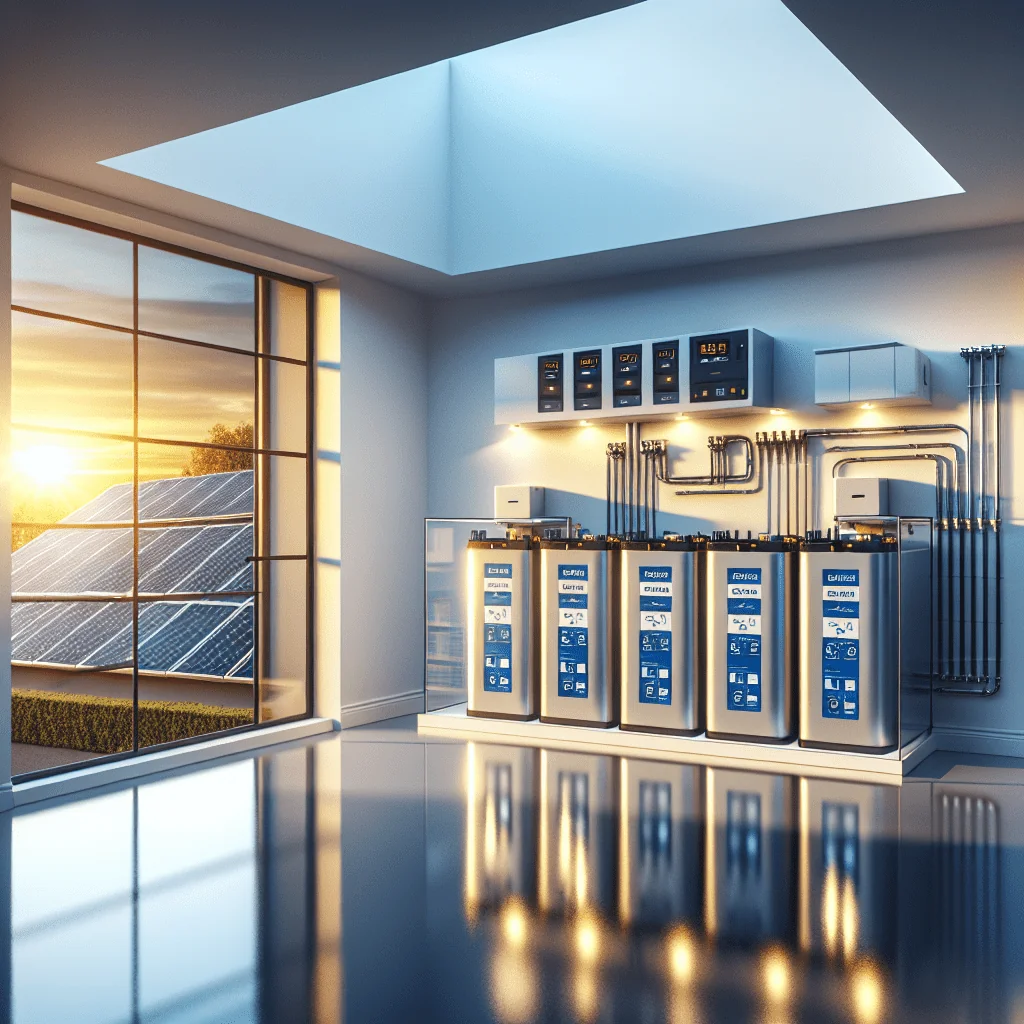
How to Extend Solar Battery Life: Practical Tips for Home Systems
In this article
You don’t buy a solar battery because you like spending money on boxes of chemicals. You buy it because you want the lights to stay on, the fridge to keep humming, and the generator to stay quiet. So the real question isn’t “How does a battery work?” but “How do I keep this thing alive as long as possible?”
I’ve seen two kinds of systems: the ones people baby a little and forget about for 8–10 years, and the ones that are “set and forget” in the wrong way and die in three. The difference usually isn’t some fancy brand. It’s how the system is designed, charged, and abused (or not) every single day.
Start With the Right Battery Type and System Voltage
Before you obsess over tiny tweaks, zoom out. If the basic design is wrong, no amount of “pro tips” will save it. Two big early decisions matter more than people like to admit: what chemistry you choose, and what voltage you run the system at.
Lithium vs lead-acid battery for solar longevity
Let’s be blunt: if you’re cycling your batteries every day and you can afford it, lithium is usually the grown-up choice. It handles deeper discharges, shrugs off daily cycling, and keeps more of its capacity over time. You pay more up front, but you’re not buying a new bank every few years.
Lead-acid (flooded, AGM, gel) still has its place. It’s cheaper on day one and can work fine if:
1) you don’t drain it too far, and
2) you actually maintain it instead of pretending maintenance is a myth.
Use your batteries hard every night? Lithium tends to win the long game. Need occasional backup for outages a few times a year and you’re willing to top up water and keep an eye on things? Lead-acid can be perfectly reasonable. Just don’t treat lead-acid like a “run it to empty, it’ll be fine” battery. It won’t.
Choosing 12V vs 24V vs 48V for lower stress
Voltage is one of those boring decisions that quietly decides whether your system runs cool and calm or cooks itself to death. Same power, higher voltage = lower current. Lower current = less heat in cables, lugs, and battery connections.
Rough, real-world rule of thumb:
- 12V – Tiny systems: RVs, cabins with a couple lights and a phone charger.
- 24V – Middle-of-the-road: small homes, sheds, workshops.
- 48V – Whole-house, serious off-grid, “I actually live on this” setups.
Could you run a whole home on 12V? Technically, yes. Should you? Not unless you enjoy thick cables, hot connections, and voltage drop headaches. For a house-sized system, 48V is usually kinder to everything, especially the batteries.
Use Depth of Discharge Wisely to Protect Capacity
Think of your battery like your knees. You can run marathons on them, but if you slam them to the pavement every day, don’t act surprised when they complain early. Depth of discharge (DoD) is how hard you’re “slamming” the battery each cycle.
What depth of discharge means for your battery
Depth of discharge is simply how much of the stored energy you use before you charge again. Use half the battery? That’s about 50% DoD. Use almost all of it? 80–90% DoD.
Lead-acid hates deep regular discharges. Drop it below ~50% state of charge every night and you’re basically fast-forwarding its life. Lithium is tougher and can handle 80% DoD in many cases, but even lithium appreciates not being run to the floor every single day.
Practical depth of discharge limits to extend solar battery life
Here’s how people who want their batteries to last actually set things up:
- Lead-acid: daily cutoff around 50% DoD. Deeper only for rare emergencies.
- Lithium: daily DoD in the 60–80% range, not 0–100% all the time.
You can enforce this with your inverter or charge controller’s low-voltage cutoff. And if you oversize your battery bank a bit, you don’t have to think about it as much: you naturally land in shallower cycles because there’s more capacity to spread the load across.
Size Your Solar Battery Bank and Panels for Gentle Cycling
A lot of “my batteries died early” stories start with one sentence: “We tried to save money by going smaller.” A tiny bank that gets hammered every night ages much faster than a slightly larger one that loafs along.
How to size a solar battery bank for longer life
Forget the marketing fluff for a second and do this on a napkin:
- Estimate your daily energy use in kWh (from your bill or a power meter).
- Decide how many days of backup you actually want, not what sounds impressive.
- Decide how deep you’re willing to discharge (50%? 70%?).
Example: you use 5 kWh/day, want 1 day of backup, and want to stick to 50% DoD. You need about 10 kWh of battery capacity. Once you know the kWh you’re aiming for, convert between amp-hours and kWh with:
amp-hours × system voltage ÷ 1000 = kWh
It’s not glamorous, but this is the math that decides whether your batteries are cruising or constantly gasping.
How many solar panels do I need for my home batteries?
Batteries live longer when they don’t sit half-charged for days. That means your solar array has one main job: get the bank back to full most days, not “whenever the sun feels like it.”
As a rough target, size your panels so they can replace your typical daily use in a few good-sun hours. If you burn 5 kWh/day and get about 4 decent sun hours, you want enough panels to push ~1.3 kW or so in good conditions. More if you live somewhere cloudy or you’re conservative.
When the array is too small, the battery lives in a half-full limbo. That’s bad news for both lithium and lead-acid over the long haul.
Set Charging Parameters Correctly on Inverters and Controllers
Here’s where a lot of systems quietly go wrong. People spend thousands on hardware, then leave the default charging profile set to “whatever it shipped with.” That’s like buying a new car and never adjusting the seat or mirrors.
Solar inverter vs hybrid inverter differences that affect life
A plain grid-tie solar inverter usually doesn’t touch batteries at all. A hybrid inverter, or a separate charge controller, does. Most modern gear includes preset profiles for common battery types—lithium, AGM, flooded, etc.
Use the right profile. If custom settings are allowed, pull the numbers from the battery’s manual: absorption voltage, float voltage, max charge current. Don’t guess. Don’t copy someone’s settings from a forum unless they’re using the same battery model.
Why your solar battery is not charging fully
If you notice the battery never quite hits “full” anymore, don’t ignore it. That’s often how early failure starts. A few common culprits:
- Charge voltages set too low or to the wrong chemistry.
- Solar array undersized or shaded more than you thought.
- Bad wiring, loose connections, or a failing sensor.
- A cell or whole battery starting to go bad.
Fixing this early keeps the battery from living at 60–70% all the time, which is a slow, quiet way to kill capacity.
Control Temperature and Environment for Longer Lifespan
Batteries and extreme temperatures get along about as well as laptops left on dashboards. They’ll tolerate it for a while, and then one day they just… don’t.
Ideal conditions for solar battery lifespan and degradation
Most solar batteries are happiest at roughly room temperature. Not a sauna, not a freezer. Heat speeds up the chemical aging inside; cold slashes your usable capacity and can make charging some lithium chemistries unsafe.
So, practical steps:
- Put the bank in a shaded, dry, ventilated space.
- Avoid direct sun, attics that turn into ovens, or damp sheds.
- In cold climates, consider mild insulation or a conditioned space so you’re not charging a frozen lithium pack.
It doesn’t have to be perfect. Just not brutal.
Use the Right Inverter Size and Loads to Reduce Stress
Your inverter and your habits decide how violently you pull power from the battery. People love to oversize inverters “just in case,” and then wonder why their system feels inefficient.
What size inverter for a solar battery system?
Start with your real peak load, not your fantasy “everything on at once” number. Add a reasonable safety margin. That’s it.
A too-small inverter runs flat out, gets hot, and may trip. A too-big inverter wastes power just idling and can nibble away at your battery every hour it’s on, even when you’re not using much.
For full-house systems, be honest about big loads like air conditioning, electric heaters, or welders. You might decide some of those stay off the battery entirely or only run when the sun is strong.
Managing loads to extend solar battery life
Big surge loads—well pumps, compressors, some power tools—can yank voltage down hard. Do that over and over, and you’ll see more stress and more low-voltage cutoffs.
A few simple habits help a lot:
- Don’t start every heavy appliance at the same time.
- Run energy-hungry tasks (laundry, dishwashers, power tools) when the sun is out so panels share the load.
- Use efficient appliances instead of cheap power hogs “because they were on sale.”
Good batteries plus a sensible inverter plus half-decent load management beats “monster inverter, tiny bank, everything on at once” every time.
Follow a Simple Solar Battery Maintenance Checklist
Maintenance isn’t glamorous. Nobody brags at parties about cleaning terminals. But the people who quietly do it every so often are the ones not replacing batteries early.
Here’s a straightforward checklist you can actually follow:
- Once a month, pop the cover and look at cables and terminals. Any green fuzz, loose lugs, or heat discoloration? Fix it.
- Keep the tops of the batteries clean and dry. Dust plus moisture can cause tiny leakage paths.
- For flooded lead-acid, check electrolyte levels and top up with distilled water only.
- Verify inverter and charge controller settings still match your battery type and voltage. Firmware updates and “helpful” installers can change things.
- Log state of charge, voltages, and any alarms in a notebook or app. Patterns matter more than one weird reading.
- Once or twice a year, do a controlled backup test and see how long the system actually runs.
- Glance at ventilation and temperature in the battery area during both hot and cold seasons.
Lithium banks usually need less hands-on work, but they’re not magic. Keep an eye on the battery management system (BMS) data or app, and don’t ignore warnings.
Key Solar Battery Choices and Their Effect on Lifespan
All these little decisions add up. To see the pattern more clearly, here’s a quick comparison of the choices that really move the needle on battery life.
| Design Choice | Option | Impact on Life |
|---|---|---|
| Battery chemistry | Lithium | Usually far more cycles, handles deep discharges better, but costs more up front. |
| Battery chemistry | Lead-acid | Cheaper initially, but touchy: hates deep discharge and sitting partly charged. |
| System voltage | 12V | Fine for small loads; higher current for the same power, more heat and voltage drop. |
| System voltage | 24V / 48V | Lower current, cooler wiring, less stress on batteries in medium and large systems. |
| Depth of discharge | Shallow (20–40%) | Many more cycles and gentler aging, but needs a larger bank to get the same runtime. |
| Depth of discharge | Deep (70–90%) | More usable energy per cycle from a smaller bank, but noticeably faster wear. |
| Charging profile | Correct settings | Smoother charging, fewer faults, and slower capacity loss over the years. |
| Charging profile | Wrong settings | Chronic undercharge or overcharge, weird behavior, and early failure. |
Once you see how these pieces interact, the pattern is obvious: cooler, shallower, correctly charged batteries live longer. It’s not magic; it’s just physics and a bit of restraint.
Design Choices That Support Long Battery Life
The cheapest time to protect your batteries is when you’re still on paper, not when the electrician has already left. A few decisions at the design stage can save you from years of annoyance.
Choosing an off-grid solar battery and backup approach
If you’re off-grid, your battery bank is your lifeline. It works every single day, not just when the grid hiccups. In that case, paying more for a battery with a clear cycle life rating and a solid warranty is usually worth it.
For grid-tied homes, the story is different. You might mostly care about backup during outages or shaving peak rates. Then a smaller bank, cycled less often, can make sense—and you might accept a cheaper chemistry if you’re not beating on it daily.
Some people mix approaches: a fixed home battery bank plus a portable solar generator. The portable unit handles small loads, camping, or power tools away from the house. That takes some wear off the main bank and gives you a backup for your backup.
Considering solar battery installation requirements and safety
Safety is the boring part that only becomes interesting when something goes wrong. Follow local codes, use proper fuses and breakers, and label things clearly so you—or anyone else—can understand the system a year from now.
A few non-negotiables:
- Protect cables from rubbing, crushing, and accidental damage.
- Keep metal tools away from exposed terminals; one dropped wrench can weld itself on.
- Use proper protective gear around flooded batteries; acid in the eyes is not a learning experience you want.
- Don’t mix old and new batteries in the same series string unless you enjoy weird behavior and uneven aging.
Clean wiring and correct protection don’t just look nice; they dramatically cut the odds of a short that can ruin a battery bank in seconds.
Bringing It All Together for Longer-Lasting Batteries
Extending solar battery life isn’t about one magic setting. It’s about stacking a bunch of small, smart choices in your favor.
Think of it in three layers:
- Design: pick the right chemistry, voltage, and rough size.
- Operation: sane depth of discharge, realistic loads, correct charging.
- Care: occasional checks, decent temperature, and fixing small issues early.
Once you know how deep you’re cycling, how often you hit full charge, and roughly how long your backup actually lasts, you can tweak things: add a panel, change a cutoff, move a heavy load to daylight hours. None of that feels dramatic, but over years it’s the difference between “these batteries died already?” and “I kind of forgot they were there.”
If you’re planning or reviewing a system, walk through this sequence:
- Figure out your daily energy use and how many hours or days of backup you truly need.
- Pick a battery chemistry and system voltage that match that reality, not just the cheapest quote.
- Size the battery bank so your normal depth of discharge is on the gentle side.
- Size the solar array so the bank usually reaches full charge on good-sun days.
- Set inverter and charge controller parameters to exactly what the battery manufacturer recommends.
- Install the batteries in a cool, dry, ventilated space with proper protection and labeling.
- Follow a simple maintenance routine and pay attention to early signs of capacity loss or weird behavior.
Do those things, and you’re not just buying a battery—you’re giving it a decent life. In return, it’ll quietly keep your home running for years without demanding much more than the occasional glance and a bit of common sense.