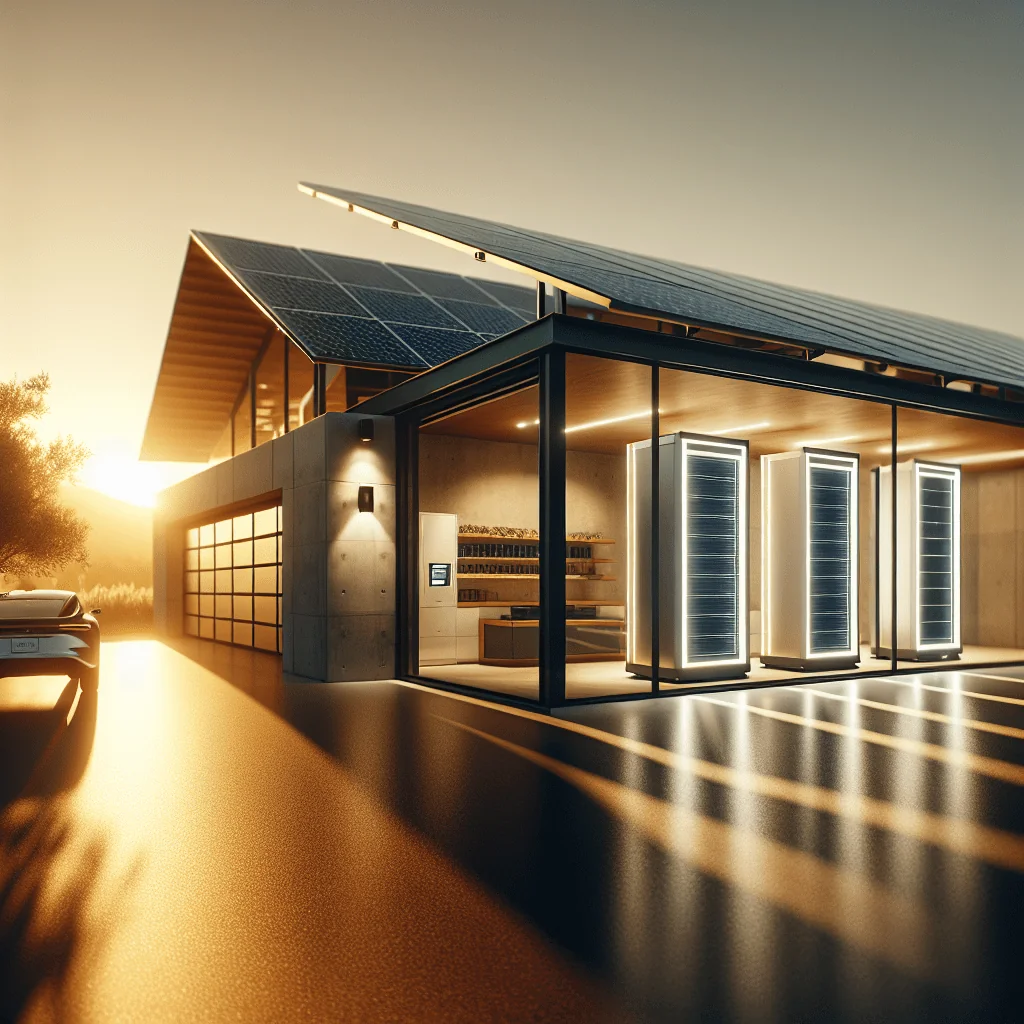

Designing a Solar Power System With Battery Redundancy
In this article
Designing a solar power system with battery redundancy means planning solar panels, batteries, and inverters so your home keeps running even if one part fails or the grid goes down. To do this well, you must decide how many solar panels you need for your home, size and choose your solar battery bank, and understand key ideas like depth of discharge, system voltage, and inverter type. This guide walks you through the main design choices so you can build a reliable, safe, and cost‑aware system that suits your energy needs.
Clarifying Your Goals and Loads Before You Design
Before buying hardware, you need a clear picture of what you want the system to do. Some people want full off‑grid living, while others only want backup for short grid outages. Your goals shape how many solar panels you need and how large your battery bank should be.
How Many Solar Panels Do I Need for My Home?
To estimate how many solar panels you need for your home, first check your daily energy use in kilowatt‑hours (kWh) from your electric bill or a measured load list. Divide that daily kWh by the average daily sun hours in your area and by the wattage of each panel, then add a margin for system losses. Higher daily use or lower sun hours both mean you need more panel capacity to power your loads and recharge your batteries.
Defining Critical Loads and Backup Duration
Battery redundancy adds another question: how many hours or days of autonomy do you want during bad weather or grid outages? A system sized for one day of backup will cost less than one sized for three days, but it will be less resilient. Write down your must‑run loads, such as fridge, lights, internet, and maybe a well pump, and use those as the base for backup design. This list guides both panel sizing and battery storage size.
Is Solar Battery Storage Worth It for Redundant Systems?
Solar battery storage can be worth it if you value backup power, energy independence, or using more of your solar energy on site. For a system with battery redundancy, storage is essential because the batteries carry your loads when panels produce less or when the grid fails.
Solar Battery Payback Period and Non‑Financial Value
The value of solar battery storage depends on your situation. If your grid is stable and cheap, the solar battery payback period can be long, and you may choose a smaller battery bank focused on short‑term backup. In areas with frequent outages or high tariffs, a larger bank with redundancy can protect your home and reduce peak grid use. Think of the battery as both an insurance policy and an energy tool, not just a strict financial investment.
Can I Run a House on Solar and Batteries Only?
You can run a house on solar and batteries only, but the design needs careful planning and redundancy. Off‑grid systems must support daily loads, peak power, and long periods of low sun without grid support. That usually means more panels, a larger battery bank, and a clear plan for backup options such as a generator or load shedding during long cloudy periods.
Lithium vs Lead‑Acid Batteries for Solar Redundancy
Choosing lithium vs lead acid battery for solar has a big impact on redundancy, cost, and space. Each chemistry behaves differently under deep discharge and repeated cycling, so the choice affects lifetime and maintenance.
Key Differences Between Lithium and Lead‑Acid
Lithium batteries, especially LiFePO4 types, usually allow higher depth of discharge, have longer cycle life, and weigh less for the same energy. That makes them ideal for compact systems, frequent cycling, and high‑reliability home backup. Lead‑acid batteries cost less upfront but need more capacity to avoid deep discharge, require more maintenance, and degrade faster if regularly cycled hard. For many home systems, lithium gives better long‑term value despite higher initial cost.
Which Battery Type Fits a Redundant Design?
For a system with battery redundancy, lithium often makes sense because you can build smaller parallel banks with independent battery management, and each bank can deliver a higher share of its rated capacity. However, if budget is tight and you accept more maintenance and shorter lifespan, lead‑acid can still work, especially for occasional backup use. The right choice depends on how often you cycle the batteries and how much space and maintenance time you can offer.
How to Size a Solar Battery Bank With Redundancy in Mind
To size a solar battery bank, start from your backup energy target, then adjust for depth of discharge and redundancy. Work in kWh first, then translate to amp‑hours and voltage so you can match real products and wiring limits.
Step‑by‑Step Battery Bank Sizing Process
Use this simple ordered process when designing a solar power system with battery redundancy:
- Calculate critical daily energy use in kWh based on must‑run loads.
- Decide how many days of autonomy you want, such as one to three days.
- Multiply daily kWh by days of autonomy to get required stored energy.
- Choose a maximum depth of discharge, for example 80% for lithium or 50% for lead‑acid.
- Divide stored energy by allowed depth of discharge to get required battery bank capacity in kWh.
- Select a system voltage (12V, 24V, or 48V) based on total power and cable length.
- Convert kWh to amp‑hours using Ah = (kWh × 1000) ÷ system voltage.
- Split the required capacity into two or more parallel strings or packs for redundancy.
Designing redundancy means you do not put all capacity in a single string. Instead, you create separate banks or modules so one can fail or be taken offline for maintenance while the others keep running at reduced capacity. This layout improves uptime and makes troubleshooting easier.
Depth of Discharge, Lifespan, and Runtime Calculations
Depth of discharge in solar batteries is the percentage of stored energy that has been used. For example, if a 10 kWh battery delivers 5 kWh, the depth of discharge is 50%. Every battery has a recommended maximum depth of discharge that balances usable energy and lifespan.
Solar Battery Lifespan and Degradation
Solar battery lifespan and degradation depend strongly on depth of discharge and temperature. Frequent deep discharges and high heat shorten life. A redundant system can run each battery bank at a lower average depth of discharge by sharing the load, which extends total life. Keeping batteries cool, avoiding full charges and full discharges, and staying within the recommended range from the maker all help preserve capacity over time.
How to Calculate Solar Battery Runtime
To calculate solar battery runtime, divide usable stored energy by the average load. Usable energy is total kWh multiplied by allowed depth of discharge. For example, if your usable energy is 12 kWh and you run a 1 kW average load, your runtime is about 12 hours. In a redundant design, you also check how long one bank alone can support your critical loads in case another bank fails so you know your worst‑case backup time.
System Voltage Choices: 12V vs 24V vs 48V
The choice between a 12V vs 24V vs 48V solar battery system affects cable size, inverter options, and how you build redundancy. Higher voltage means lower current for the same power, which reduces cable losses and allows smaller conductors.
Comparing Voltage Levels for Home Systems
For small systems and portable setups, 12V is common and simple. For typical home backup or off‑grid homes, 24V or 48V usually works better, especially if you draw several kilowatts of power. A 48V system is often the most efficient and flexible for larger homes, and it makes it easier to split batteries into separate parallel strings for redundancy. Choose the voltage that matches your inverter options and the power levels you expect.
Solar Battery Amp‑Hours to kWh Conversion
Understanding solar battery amp hours to kWh conversion helps you compare products. The basic formula is kWh = (Ah × V) ÷ 1000. For example, a 200 Ah battery at 24V has (200 × 24) ÷ 1000 = 4.8 kWh of stored energy before depth of discharge limits. Use this conversion to check that your planned bank meets your kWh target at the chosen system voltage.
Quick comparison of voltage levels for home solar battery systems:
| System Voltage | Typical Use Case | Main Advantages | Main Drawbacks |
|---|---|---|---|
| 12V | Small cabins, RVs, portable solar generators | Simple, many accessories, easy to understand | High current at higher power, thicker cables |
| 24V | Small to mid‑size homes and backup systems | Lower current than 12V, good inverter options | Less common than 12V for small devices |
| 48V | Full‑home backup and off‑grid houses | Lowest current, efficient for high power | Needs compatible inverters and safety care |
This table helps you match your solar battery system voltage to your home size and power needs while keeping wiring and redundancy plans realistic and safe.
Solar Inverter vs Hybrid Inverter in Battery Systems
Understanding solar inverter vs hybrid inverter differences is key when you add batteries and redundancy. A standard grid‑tie solar inverter connects panels to the grid and often cannot support batteries directly. A hybrid inverter or inverter‑charger can manage solar, batteries, and grid or generator in one unit.
What Size Inverter for a Solar Battery System?
When choosing what size inverter for a solar battery system, add the peak power of the loads you want to run at once and include surge ratings for motors and compressors. Oversizing the inverter slightly can improve reliability, but very large inverters draw more idle power, which matters if you run off batteries for long periods. For redundancy, some homes use two inverters in parallel or a hybrid inverter with a backup portable unit.
Hybrid Inverters and Redundant Battery Banks
For a system with battery redundancy, hybrid inverters or separate inverter‑chargers are often better because they can charge and discharge multiple battery banks, run in backup mode during outages, and control energy flows. Some hybrid inverters support separate battery inputs or allow parallel inverters for redundancy. Check that your chosen inverter can manage your planned system voltage, battery chemistry, and total charge and discharge currents.
Choosing and Using Solar Batteries for Backup
Best solar batteries for home backup are those that match your energy goals, budget, and maintenance style. You want batteries that can deliver enough power, last many cycles, and work safely with your inverter and charge controller.
How to Choose an Off‑Grid Solar Battery
For full off‑grid use, how to choose an off‑grid solar battery becomes critical. Look for good cycle life at your planned depth of discharge, a suitable temperature range, safe chemistry, and easy integration with your inverter. Lithium batteries are often preferred for off‑grid systems because of higher usable capacity and lower maintenance, but high‑quality lead‑acid can still work if sized generously and kept within recommended discharge limits.
Best Portable Solar Generator vs Fixed Battery System
Some homeowners compare the best portable solar generator vs battery system for backup. Portable solar generators are self‑contained units that combine a battery, inverter, and charge controller, often with simple plug‑and‑play use. They are useful as a small backup for critical loads or as a temporary power source when your main system is down. However, they usually have less capacity and flexibility than a fixed solar battery system tied into your home wiring, so they work best as a secondary layer rather than the main backup system.
Solar Battery Safety, Installation, and Maintenance
Solar battery safety tips become even more important when you use multiple banks. Each bank adds cables, breakers, and potential fault points, so good design and installation are essential for a safe, redundant system.
Solar Battery Installation Requirements
Key solar battery installation requirements include proper ventilation, clear access for maintenance, correct over‑current protection, and secure mounting. Keep batteries away from flammable materials and moisture, and follow local electrical codes and maker guidelines. Use proper fuses or breakers on each string so a fault in one bank does not damage the others.
Solar Battery Maintenance Checklist
Use a simple checklist to keep your solar battery system healthy and your redundancy effective:
- Inspect cables and terminals for tightness, corrosion, or damage.
- Check battery state of charge and compare banks for any mismatch.
- Review inverter and charge controller logs for error messages.
- Look for signs of swelling, leaks, or unusual heat on any battery.
- Keep the battery area clean, dry, and free of clutter or dust.
Regular checks help you catch problems early and prevent one weak bank from dragging down the rest of the system. Good maintenance greatly extends solar battery lifespan and slows degradation across all banks.
Why Is My Solar Battery Not Charging Fully?
Even with redundancy, you may face issues like a solar battery not charging fully. This can reduce your backup time and place extra stress on the other banks. Typical causes include shading on panels, incorrect charge controller settings, faulty wiring, or a failing battery module.
Basic Troubleshooting for Charging Problems
Use your inverter or charge controller monitoring to compare banks. If one bank charges slower or stops early, isolate it and test voltage and wiring. Confirm that charging limits, such as bulk and float voltage, match the battery maker’s guidance. In a redundant system, you can disconnect the suspect bank and keep running on the others while you diagnose the problem, which is a major practical benefit of redundancy.
Solar Battery Runtime and Redundancy Planning
When you correct charging issues, recalculate solar battery runtime to confirm that each bank delivers the expected usable kWh. If a bank delivers much less than its rated capacity even after fixes, you may have hidden degradation and should plan for repair or replacement. Redundancy gives you time to act without losing all backup power, but you still need to address weak banks quickly.
Balancing Cost and Reliability in Redundant Solar Designs
Designing a solar power system with battery redundancy is a balance between cost, reliability, and energy goals. More batteries, higher‑quality chemistries, and extra inverters raise upfront cost but reduce risk and extend service life. You decide how much risk you are willing to accept and how much you are ready to spend to reduce that risk.
Putting the Whole System Together
Think about your solar battery payback period in a broad way. Include the value of avoided outages, food not spoiled in a fridge, work not lost during blackouts, and comfort for your household. By sizing your solar panels correctly, choosing the right battery type and voltage, selecting a suitable inverter, and following good safety and maintenance practices, you can build a solar power system with battery redundancy that serves your home reliably for many years. Careful planning up front leads to a system that feels simple and dependable in daily use.