
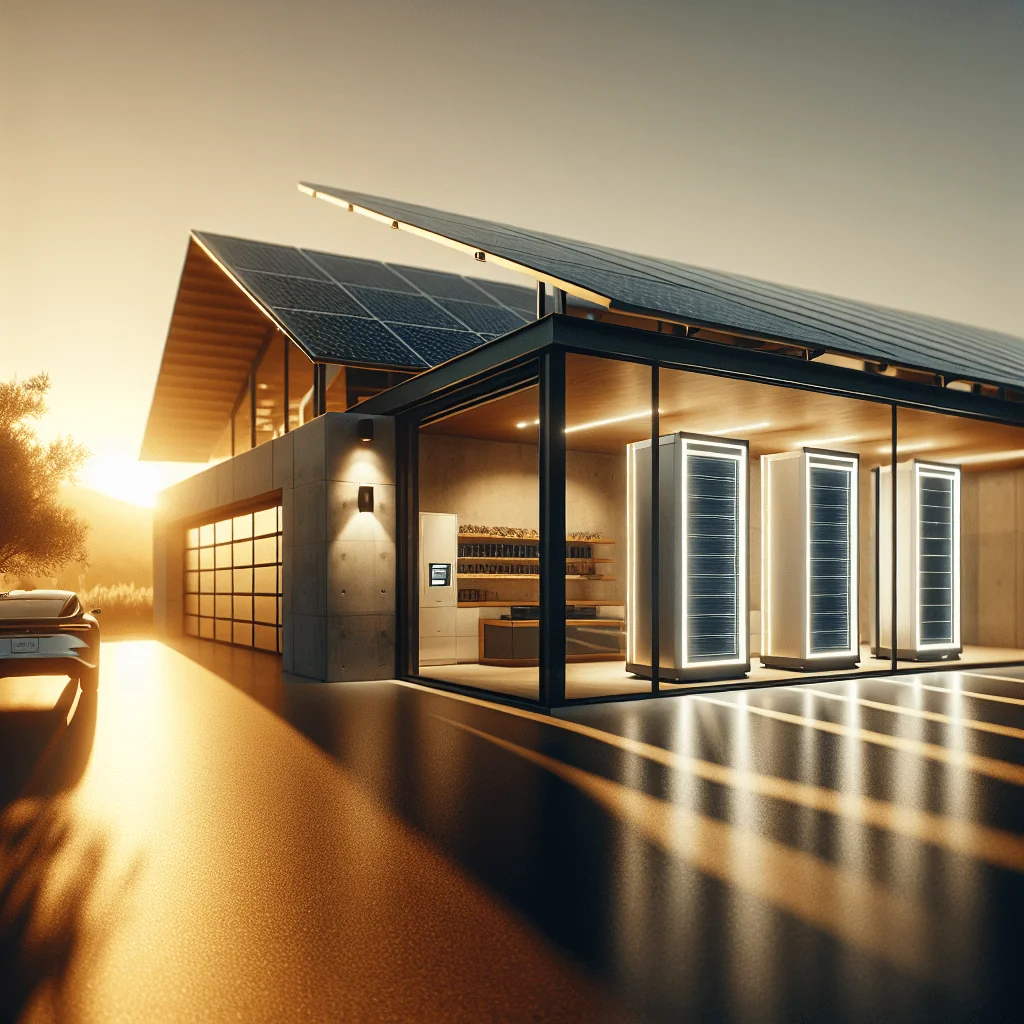
Advantages of Lithium-Ion Solar Battery Systems
In this article
If you’ve ever tried to design a solar setup for a real house — not a glossy brochure — you find out quickly that the battery chemistry quietly runs the show. How many panels you end up with, whether backup power actually lasts the night, what size inverter you can get away with… all of that gets dragged back to one question: what kind of batteries are you using? In most modern homes, that answer is lithium-ion, and it’s not just because it’s the “new thing.” It’s because, in daily use, over years, it usually hurts your wallet and your patience a lot less than the old lead-acid approach.
Why Lithium-Ion Has Become the Standard for Solar Storage
Lithium didn’t start out in basements and garages. It was crammed into phones, laptops, and then EVs long before homeowners started hanging sleek battery boxes on their walls. But once solar installers saw how light, compact, and stubbornly long-lived these packs were, lead-acid never really stood a chance for most residential jobs.
Lead-acid still has its die-hard fans — usually people who’ve been off-grid since dial‑up internet and know every quirk of a flooded battery bank. But for the average homeowner who doesn’t want to top up cells with distilled water or babysit charge settings, lithium’s “install it, watch the app, and get on with your life” vibe is a far better fit.
How lithium batteries fit daily solar use
Think about what a solar battery actually has to deal with: clouds rolling in and out, half-charged afternoons, random evening surges when everyone decides to cook, shower, and run the dryer at once. It’s messy. Lithium doesn’t mind messy. It can handle partial charges, frequent cycling, and quick bursts of power without throwing a tantrum.
This is why so many of the serious home backup systems you see now — the ones that just flip on when the grid dies and quietly keep the fridge, lights, and Wi‑Fi humming — are lithium-based. Designers aren’t guessing anymore; they assume lithium from the start and size everything else around that.
Energy Density and Space Savings in Home Systems
“Energy density” sounds like marketing fluff until you’re staring at a tiny wall in your garage wondering where a giant battery bank is supposed to go. Lithium packs far more energy into each kilogram than lead-acid, which in plain English means: you get more juice from less bulk.
Why compact batteries matter in real homes
Most people don’t have a spare room they’re dying to turn into a battery dungeon. If you just want to run essential loads overnight — fridge, a few lights, maybe the well pump — a lithium bank can stay surprisingly small and still do the job. That’s the only reason portable “solar generators” are even remotely practical: if they were lead-acid, you’d need a dolly and a strong back just to move them across the driveway.
In tight homes, townhouses, or anywhere space is at a premium, the difference between “this fits neatly on the wall” and “we need to rebuild the utility room” is usually the battery chemistry.
Longer Lifespan and Slower Degradation
Batteries are like shoes: the cheaper pair that falls apart after a year is not actually cheaper. Lithium usually costs more upfront, yes, but it tends to stay useful for many more charge–discharge cycles than a comparable lead-acid bank.
How degradation affects long-term performance
All batteries fade. The question is how fast. With lithium, especially when there’s a decent battery management system (BMS) and a smart or hybrid inverter keeping an eye on things, that fade is slow and predictable. You don’t wake up one winter and suddenly discover that your “10 kWh” bank behaves like a cranky 4 kWh relic.
Spread over a decade of daily cycling, that slower degradation is what often makes lithium’s higher sticker price sting less. You’re not buying the cheapest battery today; you’re buying fewer replacements and fewer “why is my system useless already?” moments later.
Higher Usable Capacity: Depth of Discharge Advantages
Here’s a detail that trips up a lot of first-time solar shoppers: a “10 kWh” battery is almost never 10 kWh of real, usable energy. Depth of discharge (DoD) — how much of that stored energy you can safely use — changes everything.
How depth of discharge changes battery sizing
With many lithium packs, you can comfortably use a big chunk of the rated capacity day after day. With lead-acid, if you treat the bank the same way — deep discharges, night after night — you’ll age it in fast‑forward. So that 10 kWh lithium system might give you something close to 8–9 kWh you can count on, while a 10 kWh lead-acid bank might be more like 4–6 kWh if you want it to last.
On paper, both say “10 kWh.” In practice, a lithium setup often lets you install a smaller bank, use more of it, and still sleep at night knowing you’re not quietly killing your batteries.
Lithium vs Lead-Acid Battery for Solar: Key Advantages
If you strip away all the buzzwords, the lithium vs lead-acid debate for home solar usually boils down to a few practical questions:
- How much of the battery can I actually use?
- How often will I have to replace it?
- How much fiddling and maintenance am I willing to do?
On those fronts, lithium tends to walk away with the trophy for most homeowners who just want things to work.
Side-by-side comparison of common traits
Here’s a quick comparison. It’s not gospel — there are good and bad examples of both chemistries — but it reflects what you typically see in the field.
Typical differences between lithium-ion and lead-acid solar batteries
| Factor | Lithium-Ion | Lead-Acid |
|---|---|---|
| Usable depth of discharge | Often safe to use a large share of rated capacity regularly | Needs shallower discharges to avoid killing lifespan |
| Cycle life | Typically survives many more daily cycles | Cycle count drops fast if you discharge deeply |
| Maintenance | Mostly “set and forget”; sealed and managed by BMS | Some types need water top‑ups, venting, and regular checks |
| Weight and size | Much lighter and smaller for the same usable energy | Bulkier and heavier, especially at higher capacities |
| Partial state of charge | Comfortable living at partial charge for long stretches | Can suffer if it never reaches full charge |
For off-grid cabins and serious backup systems, those differences aren’t academic. They decide how big the battery room needs to be, how often you’re swapping batteries, and whether your “three‑day autonomy” claim is real or just wishful thinking.
Design Flexibility: 12V vs 24V vs 48V Solar Battery Systems
Another underappreciated perk of lithium is how cleanly it scales in voltage. Home systems tend to land at 12V, 24V, or 48V, especially off-grid. Cranking the voltage up lets you move the same power with less current, which means slimmer cables, fewer losses, and fewer headaches with voltage drop.
Choosing the right system voltage for your goals
Most modern lithium home batteries are built around 48V and play nicely with hybrid inverters that can juggle solar, grid, and backup loads. If you’re trying to run a whole house — think well pumps, mini‑splits, maybe even an oven — 48V is usually where the design conversation ends up.
Smaller setups, like vans, RVs, or tiny cabins, often stick with 12V or 24V because the loads are smaller and the wiring runs are shorter. It’s not that lithium can’t do low voltage; it’s that once your power needs grow, 48V simply makes life easier.
Better Integration with Solar Inverters and Hybrid Inverters
Not all inverters are created equal. A plain solar inverter just turns panel DC into AC for the house or grid. A hybrid inverter, on the other hand, is the traffic cop: it decides when to charge the battery, when to pull from it, when to sell to the grid, and when to keep the lights on during an outage.
Why lithium pairs well with hybrid inverters
Lithium plays nicely with that kind of smart control. It can ramp charge and discharge quickly, it likes precise voltage limits, and it doesn’t sulk if you ask it to do a lot of shallow cycles for time-of-use shifting. That’s why so many “battery plus hybrid inverter” packages come as a matched set: the electronics and the chemistry are tuned to each other from the factory.
The result, when it’s done right, is boring in the best way. Grid drops? The switchover is fast enough that half the time you only notice because the neighbors’ houses go dark and yours doesn’t.
Efficiency and Solar Battery Runtime Calculations
Every time you push energy into a battery and pull it back out, you lose a slice of it. Lithium generally loses less. That “round‑trip efficiency” number matters more than most people think, especially if your solar array isn’t enormous.
How to calculate solar battery runtime
The back‑of‑the‑envelope math usually goes like this: convert the battery’s amp hours to kWh, decide how deep you’re willing to discharge it, then knock off a bit for efficiency losses. With lithium, that knock‑off is smaller, so the real‑world runtime tends to line up better with your calculations.
In practice, that means if you think you’ll get “about eight hours” of backup on key loads from a lithium bank, you’re often close. With a tired lead-acid bank that hates deep discharges and partial charging, the same math can turn out a lot more optimistic than reality.
Impact on “How Many Solar Panels Do I Need for My Home?”
People love to start with panel count, but the battery choice quietly shifts that answer. A more efficient, deeper‑cycling lithium battery lets you keep more of what your panels produce instead of throwing it away as heat and inefficiency.
Balancing array size and storage size
If your battery is just there for the occasional outage, the panel count is mostly about your daytime usage. But if you’re trying to cycle the battery daily to shave your grid bill, lithium’s higher usable capacity and efficiency mean you don’t have to oversize the array as aggressively just to cover storage losses.
There’s a sweet spot: too many panels and a tiny battery wastes potential; a big battery and a tiny array leaves you half‑charged and frustrated. Lithium doesn’t magically solve that, but it gives you more room to hit that balance without ridiculous oversizing.
Is Solar Battery Storage Worth It with Lithium-Ion?
Here’s the uncomfortable truth: in some places, with cheap grid power and no outages, batteries are a lifestyle choice more than a slam‑dunk investment. In other places, especially with nasty time‑of‑use rates or flaky grids, a lithium battery can be the difference between “nice solar system” and “why am I still paying so much?”
Weighing backup value against pure payback
Numbers don’t tell the whole story. Ask someone who’s watched a full freezer thaw during a three‑day blackout if backup power “paid back.” The value of keeping medical equipment running, staying online for work, or simply not tossing hundreds of dollars of food is hard to cram into a spreadsheet.
Lithium’s edge here is reliability with minimal fuss. No checking water levels, no guessing if the bank is on its last legs every time the lights flicker. For a lot of homeowners, that peace of mind is the real product they’re buying.
Off-Grid Use and Choosing an Off-Grid Solar Battery
Off-grid changes the tone completely. When the grid is gone, the battery is no longer a “nice add‑on”; it’s the beating heart of the system. If it fails, everything else is just shiny hardware on the wall.
Key points for off-grid battery selection
This is where lithium’s tolerance for daily deep cycling and partial charging really earns its keep. You can design for realistic usage — including a string of cloudy days — without building a battery bank the size of a small car fleet.
That said, you still have to be honest about loads. Oversizing the inverter “just in case” while skimping on the battery is a common off‑grid mistake. The inverter has to handle your peak loads, but the battery has to actually feed it. Lithium makes the sizing easier, not optional.
Safety Features and Best Practices for Lithium Solar Batteries
Lithium has had its share of scary headlines, so it’s worth saying this clearly: modern home systems are designed with multiple layers of protection. The built‑in BMS watches voltage, temperature, and current like a hawk and will shut things down before they go sideways.
Practical safety guidelines for home systems
Even with those protections, the basics still matter. A few simple habits go a long way:
- Mount the battery in a dry, well‑ventilated spot, away from direct heat or obvious moisture sources.
- Pair it with an inverter and charge gear that are actually approved for that specific battery.
- Follow the installation manual instead of “winging it” because a forum post said it was fine.
- Use proper fuses, breakers, and disconnects sized for your system voltage and current.
- Keep cardboard boxes, paint cans, and other flammables away from the battery and cable runs.
Do those things — and preferably have a qualified installer double‑check the work — and the day‑to‑day safety routine is mostly just glancing at the monitoring app once in a while.
Maintenance, Monitoring, and Common Issues
Compared to lead-acid, lithium is low‑maintenance, not no‑maintenance. You still want to keep the area clean, make sure connections stay tight and corrosion‑free, and check that the inverter isn’t throwing quiet warning codes you’ve been ignoring.
Why your solar battery may not charge fully
When someone with a lithium system asks, “Why is my solar battery not charging fully?” the culprit is usually not a dying battery. More often it’s something boring: shading that crept in as a tree grew, inverter settings that cap charge level, or a charge schedule that was never configured properly.
The upside of lithium systems is that most come with halfway decent monitoring apps. If you actually open them once in a while, you can usually spot weird behavior — like the battery never going above 70% — long before it turns into a real problem.
Lithium-Ion in Portable Solar Generators vs Fixed Battery Systems
Walk into any camping store and you’ll see lithium everywhere in “solar generators” — those all‑in‑one boxes with handles that promise silent power for your off‑grid adventures. They bundle a battery, inverter, and charge controller into a single unit and, for small loads, they’re incredibly handy.
Choosing between portable and fixed lithium systems
But they’re not magic. A portable unit is great for charging laptops, running a CPAP, or keeping a few lights on in a storm. If you’re trying to back up an entire house, though, a fixed lithium battery system tied into a full‑size array and a 24V or 48V inverter is in a different league.
So the choice is less “which is better?” and more “what are you actually trying to power?” Occasional campsite or small cabin? Portable might be perfect. Whole‑home backup with air conditioning and pumps? You’re in fixed‑system territory whether you like it or not.
From Design to Daily Use: Putting Lithium Advantages to Work
By the time you’ve wrestled with panel layouts, inverter specs, and local electrical codes, it’s easy to forget that lithium’s advantages ripple through every design choice. Higher usable capacity, better efficiency, and longer life don’t just look good on a spec sheet; they give you more room to design a system that fits your life instead of forcing your life to fit the system.
Step-by-step path to a well-sized lithium solar system
If you’re trying to map this out without getting lost in jargon, here’s a straightforward way to approach it:
- Figure out what you actually use each day and which loads you refuse to lose during an outage.
- Decide how long you want the battery to cover those essentials — hours for short blips, or days for serious outages.
- Turn that energy need into kWh, and into amp hours if your planning tools use them.
- Apply a realistic depth of discharge for lithium (not 100% every day) to size the battery bank.
- Pick a system voltage — 12V, 24V, or 48V — that matches your total power and wiring distances.
- Choose an inverter big enough to handle your peak loads with a bit of breathing room.
- Match a lithium battery model that’s officially compatible with that inverter or hybrid inverter.
- Size the solar array so it can recharge the battery within your typical daylight window, not just on perfect summer days.
- Plan the protection gear: breakers, fuses, disconnects, and safe working clearances.
- Set up monitoring so you can watch how the system actually behaves over time and tweak if needed.
Once you see how the pieces connect, lithium-ion stops being just a buzzword and becomes what it really is: the tool that lets your solar panels work around the clock instead of only when the sun bothers to show up.